Beyond VMware: Cyso's road to CloudStack
By Cyso Cloud on
The clock is ticking. We've already made a start.
If you work in cloud infrastructure, there's no need to explain what Broadcom's acquisition of VMware has set in motion. Licensing models have been overhauled, prices have gone up, features you have no interest in are forced upon you and roadmap uncertainty has become a genuine strategic concern for many organisations.
At Cyso, we recognise this. And we're not the only ones.
We regularly speak with ISPs, hosting providers and cloud partners who want their VMware environments migrated to an alternative by April 2027, at the latest; preferably one they retain full autonomy over. No vendor lock-in, no surprises on the invoice, no dependency on an American tech giant. Simply control over your own platform.
But talking about migrating is one thing. Actually doing it, with all the technical complexity, planning and open questions that brings up, is another story entirely. A six-month migration project sounds generous, until you realise that April 2027 is closer than you think.
That's why we've embarked on the exploration ourselves. From business developer to platform engineer, the entire Cyso team is working together on a thorough investigation into Apache CloudStack as a fully-fledged alternative to VMware.
In this live blog series, we'll take you along on our journey: the insights, the obstacles, and yes, the moments where we collectively take a deep breath.
Follow along. It's going to be an honest story.
Learn more about our platformFrom OpenStack to CloudStack: Why Cyso Cloud is rethinking its cloud orchestration stack
The investigation into CloudStack as a cloud orchestration solution started within Cyso in late 2024. Cyso Cloud has long standing experience with an OpenStack implementation - specifically one with Ceph storage and KVM hypervisors. Over the last couple of years one of the shortfalls we experienced with the OpenStack setup is its network capabilities, namely the lacking support for modern common network technologies (such as VXLAN and BGP EVPN) and the lack of flexibility when it comes to putting together the building blocks (compute, networking, storage) within the OpenStack framework. Some of these topics are slowly now coming into discussion within the community, but there is still a long way to go. The decentralized structure of the OpenStack project is in some ways a strength but has made the project lethargic in reacting in time with what happens in the broader compute, networking and storage space.
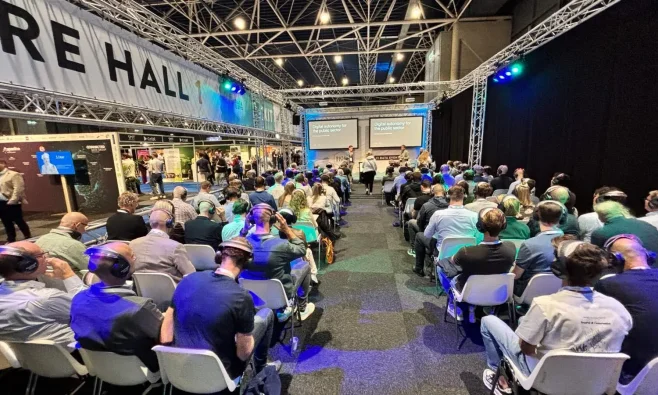
CloudStack has been in internal testing and development within Cyso Cloud due to these qualities for a while now: we've automated dev deployments, tested SDN integrations (such as Netris, which we did a presentation on at the 2025 CloudStack Collaboration Days in Milan).
The primary goal of this investment in research and development is in making steps towards a publicly accessible public cloud that is scalable across Europe with one key feature that other vendors lack: stretchable self-service VPCs across datacenters with a single control plane.
But along the way the environment for our business changed. Cyso Cloud is the public cloud offering of Cyso - but Cyso also offers an enterprise cloud on top of which we maintain various managed service provider capabilities. This is a primarily VMWare based cloud that has been slowly built up over the last 10+ years.
As many of you likely know Broadcom has changed this space, licensing has either gone up or parts of the sub-licensing model have changed to the point that it can not be renewed. Their goal is to shrink the size of direct customers to parties that deal in massive volume, not uncommon in acquisitions looking to trim fat and increase net profit.
This has affected the long-term business continuity of our managed service provider offerings and thus became a priority for various teams within Cyso. Our desire to provide more extensive network capabilities with CloudStack remains: but it now runs in parallel with an internal VMWare migration project stretched out over the company.
18 March 2026 — Why OpenStack is not the answer (for us)
We have over a decade of production experience with OpenStack. So why not just migrate our VMware workloads onto it? The short answer: network interoperability. The long answer involves flat networks, OVS complexity and a honest look at what it takes to keep OpenStack running at scale. We break down the factors that matter when planning a migration and explain why, in our case, OpenStack does not make the cut.