Second CHORYS General Assembly at TU Dresden: progress, EU review and Cyso's role
By Martijn Wokke on
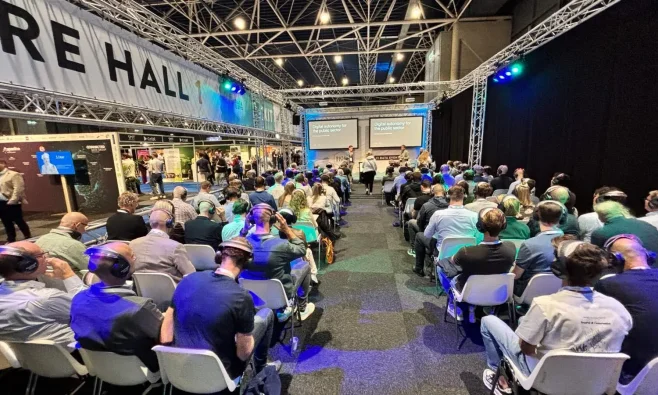
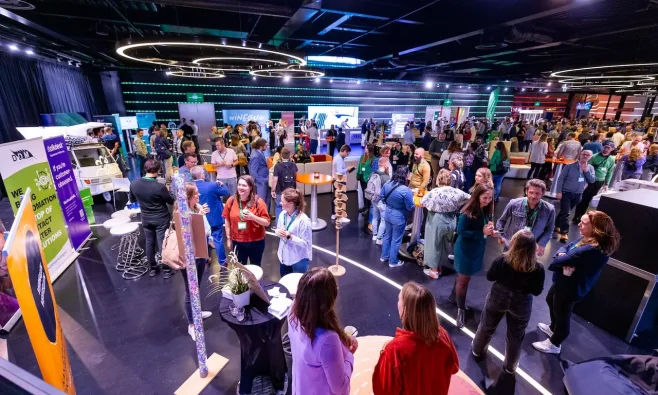
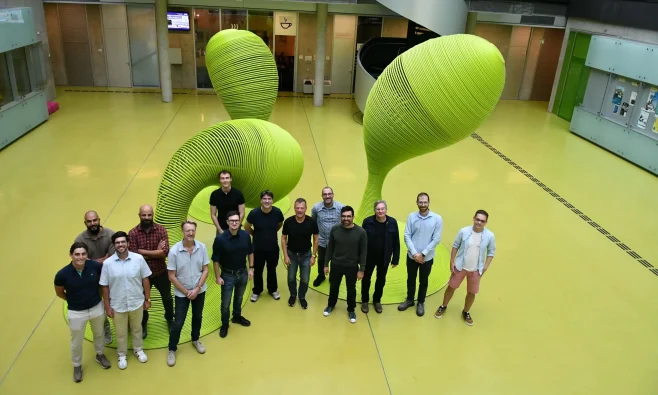
On 16 and 17 September, all consortium members in CHORYS, the Horizon Europe project working on open RISC-V accelerators for the cloud, travelled to TU Dresden for the second CHORYS General Assembly. A lot has happened since the kick-off in Copenhagen in February 2025, and it showed: PhD candidates and researchers presented their progress on each of the project's objectives and deliverables, and the second day opened with a PhD workshop.
If CHORYS is new to you, our first article on the CHORYS project covers how it started and who's involved. Here's the short version.
What is CHORYS?
CHORYS stands for "Open and Programmable Accelerators for Data-Intensive Applications in the Cloud". It asks a practical question: can Europe build its own open cloud and edge computing on open processor architectures such as RISC-V, so that it depends less on closed technology from outside Europe? To find out, the consortium develops open software that runs from the bottom of the computer all the way up to the applications, and then tests that software in real-world environments.
Near-data processing on RISC-V
Much of the research focuses on near-data processing. Instead of moving every byte to the server's CPU, storage and network devices do part of the work themselves, on RISC-V cores built into the device. The project's OpenSSD-V and OpenNIC-V work comes out of that line of research.
Who's in the CHORYS consortium
The University of Copenhagen coordinates the project. The other participants are TU Dresden, TU Darmstadt, Politecnico di Milano, Codasip, Menta, INESC-ID and Cyso, with the University of Fribourg and Computing Flows as associated partners. CHORYS runs from January 2025 to December 2028, and the European Union funds it in full under Horizon Europe (grant agreement 101189551). The CORDIS project page has the official details.
Two days of the CHORYS General Assembly at TU Dresden
Ulrike Schoebel and Wolfgang Lehner's team hosted us, and they organised it very well. Day one was about the state of the project: where each objective stands, which deliverables are done and what's coming next.
Jonas Dann kicked off day two's PhD workshop with a talk on his recent work specialising SmartNICs for Parquet, the columnar file format that a large share of analytics data is stored in. It's near-data processing in a nutshell; if the network card can take on part of the Parquet processing, the server's CPU has less to do.
What the EU reviewers concluded
A week later, reviewers working on behalf of the European Commission questioned the entire consortium to check whether the project is on track. Their conclusion was that the consortium has delivered good work so far, and they want to see the research results at the next review. That's exactly the verdict a project at this stage needs, and it sets a clear bar for the coming year.
Cyso's role in CHORYS
Cyso supplies the DevOps support and cloud resources that the researchers use for testing and development. When CHORYS tests its open software outside the lab, it needs infrastructure that behaves like a European production cloud, and that's the part we provide.
Our reason for taking part goes beyond lending capacity. The question CHORYS works on, how much of Europe's computing depends on technology from elsewhere, is the same question that sits behind digital sovereignty and sovereign cloud. Most of that conversation stops at who owns the data centre and who writes the software. CHORYS takes it one layer further down, to the processor. The project's stated aim is to show how European cloud providers and their customers can use open accelerators to get better performance, energy efficiency and cost out of data-intensive applications, and as a European cloud provider we'd like to be among the first to put that into practice.
Follow the CHORYS project
The CHORYS website publishes the project's publications, deliverables and latest developments, so it's the best place to follow the research as it progresses. For questions about Cyso's part in CHORYS, get in touch with our business development manager Martijn Wokke.
Schedule a discovery call