Cyso Cloud 2025: A year of growth, innovation and European collaboration
By Alec on
As we approach the end of 2025, we're taking a moment to reflect on what has been an amazing year for Cyso Cloud. From achieving major certifications to launching new services, from travelling across Europe to share knowledge to welcoming inspiring customers who've chosen sovereignty over convenience. This year has been a testament to the growing momentum behind European cloud infrastructure.
So grab a coffee (or a stroopwafel), and let's walk through the highlights of our 2025 journey.
A fresh start with a familiar face
The year kicked off with a significant milestone: Fuga Cloud officially became Cyso Cloud. After years of growth and maturity, it was time to bring everything under one roof. As our CEO Paul Bankert put it: "Fuga Cloud has definitively moved beyond its startup phase and is ready to be deployed as a modern service."
This wasn't just a rebrand. We were consolidating our position as a serious player in the European cloud market, ready to take on the challenges and opportunities that 2025 would bring.
Learn more about our platformJoining forces for Europe's tech future
Just weeks into the new year, we embarked on an exciting new adventure: the CHORYS European Research Project. This ambitious 4-year initiative focuses on developing open computing architecture, with particular emphasis on RISC-V based accelerators.
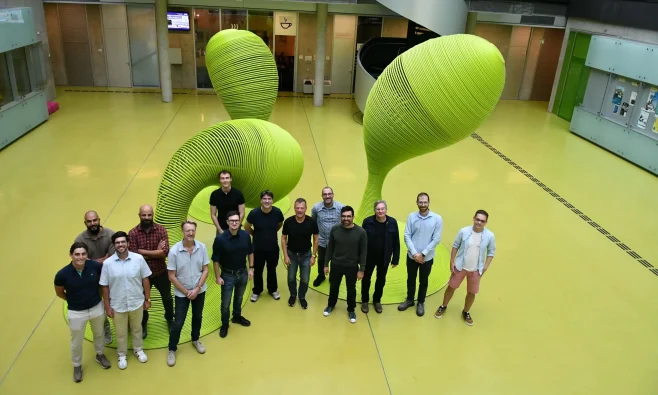
The project kick-off in Copenhagen was eye-opening. Meeting partners like Codasip (Europe's leading RISC-V company) and Menta (FPGA technology specialists) reinforced something we've always believed: Europe has the talent and determination to lead in technology.
Our role? Providing DevOps expertise and cloud resources for testing and development. It's the kind of collaboration that makes you optimistic about Europe's technological future.
CloudFest and the shifting sentiment
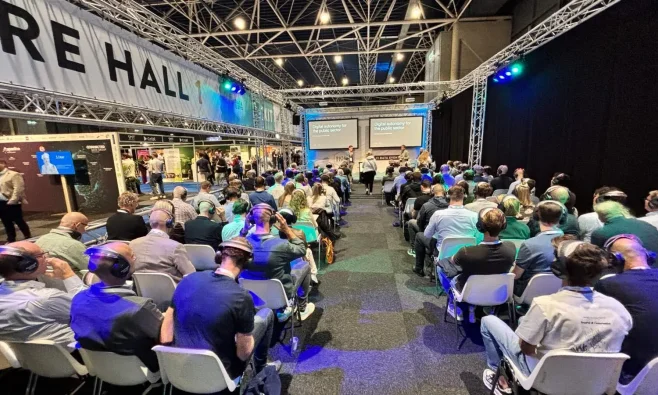
March took us to Rust, Germany for CloudFest 2025, where our Martijn Wokke took the stage. The atmosphere was fascinating, we witnessed firsthand the growing appetite for GDPR-compliant alternatives to US cloud services. The questions weren't just about features and pricing anymore; they were about sovereignty, compliance, and long-term strategic independence.
The CloudFest State of the Cloud Report painted an interesting picture of the industry's mood. Optimism had dropped from 86% in 2023 to 73% in 2024, whilst 86% of companies now prioritise AI as a key business issue. The cloud landscape is maturing, and with that maturity comes more thoughtful decision-making about where to host critical infrastructure.
London calling at KubeCon 2025
April brought us to London for KubeCon + CloudNativeCon Europe, and what an event it was. Our team gave it a solid 7.6/10 overall rating.
What made it special? The multi-perspective approach meant we absorbed everything from deep technical sessions on Kubernetes maturity to strategic discussions about AI integration in cloud-native ecosystems. And yes, European cloud sovereignty was once again a major theme. It seems wherever cloud professionals gather in Europe, the question of where data lives and who controls it isn't far behind.
Joining the KCSP Elite
Then came May, and with it, one of our proudest moments of the year.
We achieved Kubernetes Certified Service Provider (KCSP) status.
There aren't many KCSPs worldwide, and now we're one of them. This official recognition by the Cloud Native Computing Foundation (CNCF) required us to have at least three CKA-certified engineers, and we exceeded that bar.
Dutch Cloud Native Day
Summer arrived, and with it, the Dutch Cloud Native Day in Utrecht on 3 July. As Silver Sponsor, we immersed ourselves in discussions about GitOps workflows, service mesh adoption, cloud cost optimisation, and EU compliance requirements.
These regional events have a special quality. They're smaller, more intimate, and the conversations tend to be more practical and less theoretical. People want to know: "How do I actually implement this? What are the pitfalls? How do you handle this specific challenge?"
That's the kind of knowledge sharing we love.
Pancakes, community, and CloudStack
August was delightfully eclectic. At WHY2025, we set up shop in Pancake Village and spent days flipping pancakes for hundreds of visitors. If you've never experienced WHY, it's hard to explain, it's Europe's unique tech community gathering, entirely volunteer-driven, where hacker culture meets genuine human connection.
Standing there, spatula in hand, chatting with people from across Europe about everything from container orchestration to the meaning of digital sovereignty (between pancake orders, of course), that's the spirit of the European tech community we're proud to be part of.
We also announced our Diamond Sponsor status for the CloudStack Collaboration Conference in Milan. The investment reflected our deep commitment to the CloudStack ecosystem and open-source infrastructure.
ContainerDays Hamburg
September brought us to ContainerDays Hamburg, and Platform Engineer Thomas Jansema came back energised. At roughly 10% the size of KubeCon, this intimate, technically-focused conference offered something different.
As Thomas put it: "What we discovered was a carefully curated environment where container enthusiasts could engage in meaningful technical discussions without the overwhelming scale."
Sometimes smaller is better. The conversations were deeper, the networking more meaningful, and the technical content more focused. We explored Kubernetes scaling challenges, platform engineering approaches, European cloud sovereignty initiatives, and OpenTelemetry for observability.
Launching our own European alternatives
October was a big month for product launches. First up: our Transactional Email Service.
Here's the thing about transactional emails, they're critical infrastructure. When your application needs to send a password reset, a purchase confirmation, or a security alert, you need that email to go through. And yet, so many businesses default to American services without considering the implications.
Our service is 100% Dutch infrastructure, GDPR-compliant by design, with no tracking by default. We offer 1000 free emails per month, then just €0.50 per 1000 emails thereafter.
Read more about our Transactional Email ServiceWe also announced two beta services that we'd been quietly developing:
Identity as a Service (IDaaS): centralised authentication and access control with complete data sovereignty. Because who manages your identity shouldn't mean giving up control over where that data lives.
Cloud Databases: automated database hosting with backups and monitoring included, all GDPR-compliant. Simple, sovereign, and sensible.
The European cloud infrastructure landscape keeps evolving, and we're determined to stay ahead whilst keeping our core promise intact: complete data sovereignty within European borders.
Take a look at our beta servicesMilan and the CloudStack Community
November brought us to Milan for the CloudStack Collaboration Conference, where we showed up as Diamond Sponsor with two presentations ready to share.
Paul Bankert delivered "CloudStack exploration at Cyso: lessons learned and pitfalls encountered", an honest, practical session about our real-world journey.
Our platform engineers followed with "Automating CloudStack networking with Netris integration", a technical deep-dive into how we're revolutionising network management within CloudStack environments.
Customer stories that inspired
Throughout 2025, we've been privileged to work with customers who truly understand what's at stake when choosing cloud infrastructure. Let us share a few stories that exemplify why we do this work.
WebHarvest: When the political landscape changes
Patrick van der Willik, founder of WebHarvest, an AI automation platform, made a decision that took courage. He was already on Microsoft Azure with available credits, the path of least resistance would have been to stay put.
Webharvest migrated to Cyso Cloud, achieving data sovereignty within Dutch borders. Not despite having Azure credits, but because control mattered more than convenience.
CloudSheet: Data that stays in Europe
Graham Bolton, founder of CloudSheet, a spreadsheet platform, put it simply: "We specifically chose a European cloud provider because we wanted our data to remain on European soil."
The result? Cost savings for their end-customers and the peace of mind that comes from knowing exactly where your data lives and under which jurisdiction it falls.
Read all our customer storiesCommunity and partnerships: Stronger together
Our membership in the Dutch Cloud Community is a commitment to strengthening the Dutch cloud sector alongside our peers. We're better when we collaborate, when we share knowledge, and when we collectively raise the bar for what European cloud infrastructure can achieve.
These partnerships matter. They're how we build not just individual companies, but an entire ecosystem that can compete globally whilst keeping European values at its core.
Cyso joins the Dutch Cloud Community2025 in numbers
Let's talk metrics, because they tell a story of their own:
6+ major events attended or sponsored across Europe
2 new services launched (Transactional Email + Beta services)
1 major certification achieved (KCSP, one of the few worldwide)
100% European - all data stays within EU borders, always
99.99% uptime SLA for infrastructure
99.9% SLA for Managed Kubernetes
Each percentage point of uptime represents applications that stay running. Each new region represents lower latency for European users. Each certification represents expertise you can trust.
Looking ahead: European expansion
We're not standing still. Currently, we're actively exploring new regions: Munich, Zurich, Milan, Paris, Madrid, Copenhagen, Stockholm, Helsinki, Tallinn, Lyon, Brussels, and Luxembourg.
Why so many potential locations? Because European cloud sovereignty isn't about building one massive data centre in one country. It's about building a distributed, resilient infrastructure that serves all of Europe whilst respecting the sovereignty and regulatory requirements of each nation.
The demand is there. Businesses increasingly understand that where their data lives matters, not just for compliance, but for strategic independence, for risk management, and for aligning their technology choices with their values.
Decide where Cyso Cloud goes nextThe bigger picture
Questions that seemed fringe a few years ago "Where exactly is my data?", "Under which jurisdiction?", "Who has access?", are now mainstream concerns. Government policy is catching up. Businesses are reconsidering their cloud strategies. And European alternatives are being taken seriously, not as cute regional players, but as viable competitors to the hyperscalers.
We've seen it in the customer conversations, in the conference discussions, in the policy debates. The tide is turning.
Are we claiming victory? Absolutely not. The hyperscalers have massive resources, established ecosystems, and years of market dominance. But they also have something working against them: they can't truly be European. They can build data centres in Europe, sure. But ultimately, the control, the jurisdiction, and the loyalty all flow back to their home countries.
For businesses and governments that take sovereignty seriously, that's not good enough. And increasingly, European organisations are deciding it's not good enough for them either.
Thank you
None of this would be possible without our customers who trust us with their infrastructure, our partners who collaborate with us to strengthen the European cloud ecosystem, our team who work tirelessly to deliver a great platform, and the broader European cloud community who inspire us with their passion and expertise.
2025 solidified Cyso Cloud's position as a European cloud provider through certifications, innovations, strong customer results, and active community involvement across Europe. But more than that, it showed us that we're part of something bigger than ourselves; a movement towards digital sovereignty that's only just getting started.
Here's to 2025, and here's to the work ahead in 2026.
Happy holidays from all of us at Cyso Cloud.